|
LES TRULLI OU
CASEDDE D'ALBEROBELLO (PROVINCE DE BARI, ITALIE)
À TRAVERS LES CARTES POSTALES ET PHOTOS ANCIENNES
The trulli or
casedde of Alberobello, province of Bari, Italy,
through old postcards and photos
Christian Lassure
version française
version bilingue français-anglais
version anglaise
III - LES AVATARS DE LA RUE MONTE PERTICA AU QUARTIER MONTI (1950-2010)
III - THE CHANGING FACE OF VIA MONTE PERTICA IN THE MONTI DISTRICT (1950-2010)
|
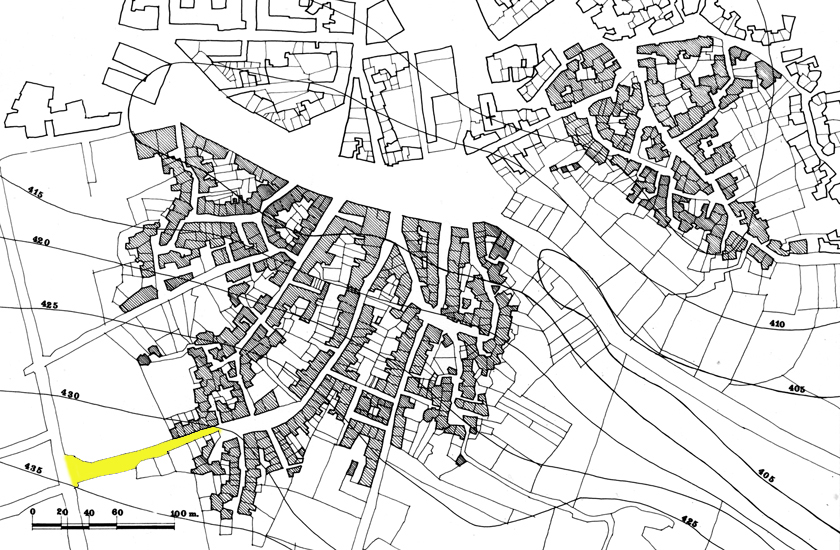
La rue Monte Pertica se trouve dans le quartier Monti (le quartier « des
Monts »), qui occupe une colline dans la partie sud d'Alberobello. Cette rue se prolonge
par la place d'Annunzio et la rue San Michele, l'ensemble formant un arc de cercle
depuis l'église Saint Antoine de Padoue à l'ouest jusqu'à la place Largo Martellotta au
nord.
|
|
Monte Pertica street
is in the Monti district ("the
district of the Mounts"), a hill in the southern part of Alberobello. The street
leads through Piazza d'Annunzio into via San Michele, forming an arc of circle from
San Antonio de Padova church in the west to the Largo Martellotta market place in
the north.
|
|
|
 |
|
Plan de la partie sud
de la ville d'Alberobello avec ses deux zones à trulli, le rione Monti, à gauche,
et le rione Aia Piccola, à droite.
Map of the southern part of the town of Alberobello with
its two trullo zones, the Monti district on the left, and the Aia Piccola
district on the right. |
|
|
|
DOCUMENT 1 |
|
 |
|
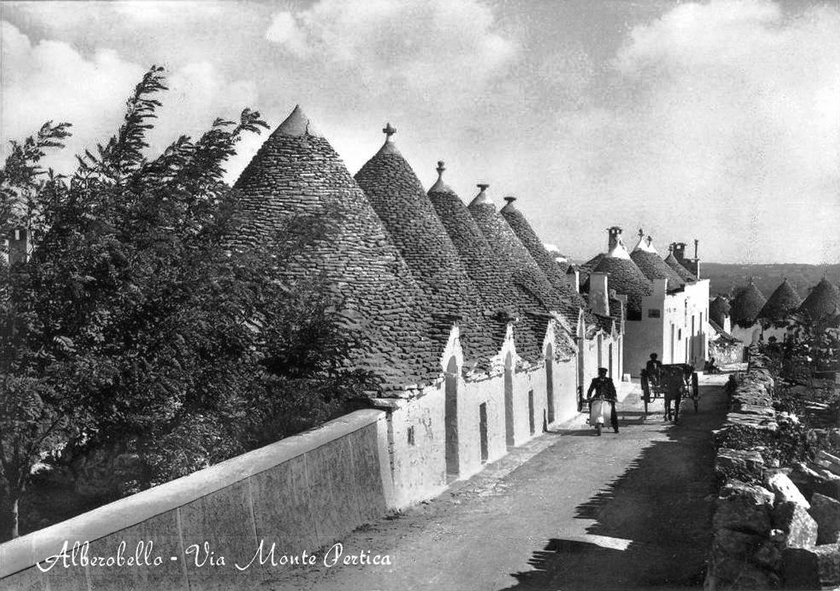
Carte postale noir et blanc du milieu
des années 1950 (une version colorisée existe également). Éditeur : Mostra dei Trulli.
Photo : Fanizzi Bernardino.
Black and white postcard of the mid
1950s (a coloured version also exists). Publisher: Mostra dei Trulli. Photo by
Fanizzi Bernardino. |
|
Dans cette carte postale noir et blanc
du milieu des années 1950, on observe, dans le prolongement du mur moderne à
gauche, un alignement de plusieurs habitations à trullo dont les cônes
sont sensiblement de même hauteur. Un deuxième alignement s'étire un peu plus
loin, après l'interruption d'une ruelle transversale. La rue est étroite et
un mur borde des jardinets du côté opposé à celui des habitations. Deux moyens
de transport s'y côtoient, ue carriole tirée par un cheval, et une vespa, le
deux-roues à la mode dans les années 1950. On n'aperçoit, sur le devant des
cônes, aucun symbole badigeonné au lait de chaux. |
|
In this black and white photograph of the mid-nineteen fifties, a row of several
trullo houses with same-size conical roofs can be seen as a continuation
of the modern wall on the left. Beyond the small recess formed by a crosswise
street, a second row of houses extends further down. Via Monte Pertica is a
narrow street with a dry stone wall lining a number of small front gardens on
the side opposite the trullo houses. A traditional horse-driven cart and
a vespa, the popular two-wheeler of the time, are seen side by side halfway
along the street. No whitewashed symbol is visible across the front of the
trullo roofs. |
|
|
|
DOCUMENT 2 |
|
 |
|
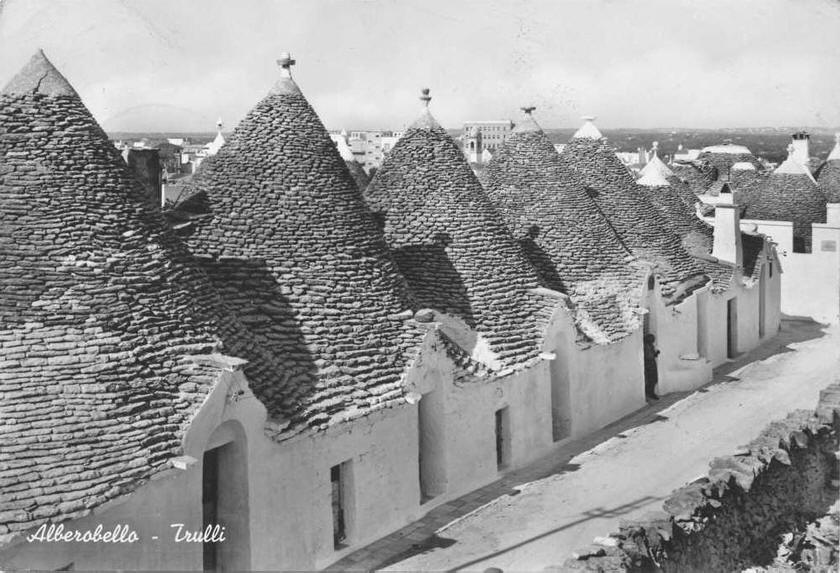
Carte postale noir et blanc des années 1950.
Black and white postcard of the
1950s. |
|
Le même alignement de maisons, vu en
plongée depuis le haut d'un bâtiment de l'autre côté de la rue. Il y
a en tout 6 cônes, le dernier, à droite, étant de moindre hauteur.
Les faîtages sont tous différents, avec de gauche à droite :
- un enduit au ciment autour de la pointe du cône;
- un pinacle formé d'une dalle circulaire coiffée d'une boule;
- un pinacle formé d'un cône la pointe en bas et coiffé d'une boule;
- un pinacle réduit à une dalle circulaire;
- un pinacle identique au précédent mais badigeonné au lait de chaux;
- un enduit, badigeonné de blanc, recouvrant la pointe du cône.
On est à même d'interpréter la structure
du mur de pierre sèche bordant l'autre côté de la rue : il s'agit
d'un mur à fruit surmonté par un chaperon de grandes lauses posées
sur la tranche. Cette disposition explique l'ombre découpée visible
dans la précédente carte postale. |
|
The same row of houses as seen from the top of a building on the opposite
side of the street. There are as many as six trullo cones, all
of identical size except the smaller one furthest to the right.
Each apex is different, though. From left to right, there are:
1 - an apex rendered with mortar;
2 - a pinnacle consisting of a circular slab topped with a ball;
3 - a pinnacle consisting of an upturned cone topped with a ball;
4 - a pinnacle consisting of a mere circular slab;
5 - a pinnacle identical to the previous one, but whitewashed;
6 - an apex rendered with mortar, complete with whitewash.
The structure of the dry stone wall across from the row of trullo houses
comes out plainly: battered facings, a coping of large slabs set on edge (hence
the serrated shadow visible in the previous postcard). |
|
|
|
DOCUMENT 3 |
|
 |
|
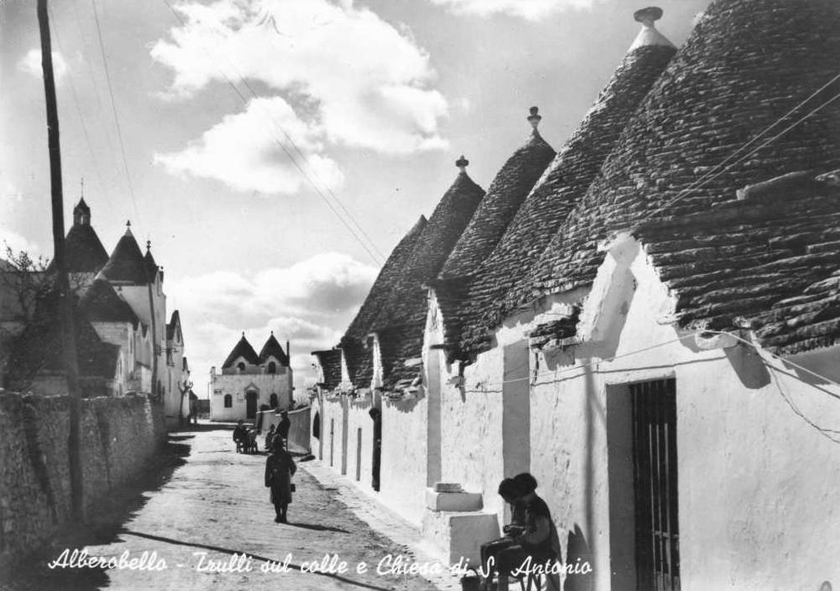
Carte postale noir
et blanc des années 1950. Éditeur : Ditta Cav. Giuseppe Lo Buono / Via Roberto da
Bari 6 - Bari. Foto Mastrorilli - Bari.
Black and white postcard of the 1950s. Publisher : Ditta
Cav. Giuseppe Lo Buono / Via Roberto da Bari 6 - Bari. Foto Mastrorilli - Bari. |
|
Cette autre carte postale des années
1950 montre la rue Monte Pertica depuis son extrémité est. Au fond, sur la
gauche, se dressent la façade et les cônes de l'église de Saint Antoine,
construite en 1926. Face au débouché sur la rue Cadore, se profile une maison
à terrasse surmontée de deux trulli, contemporaine de l'église. On remarque
la présence d'un symbole badigeonné sur le 4e cône (en partant de la
gauche) de l'alignement de trulli. La ruelle est animée : des riverains,
assis sur des chaises devant leur maison, font la causette ou s'affairent à
quelque tâche, spectacle caractéristiques des rues (sans circulation automobile)
de l'époque. |
|
In this third postcard
of the 1950s, Monte Pertica street is seen from its eastern end. In the background,
to the left, stand the façade and trullo cones of the church of Saint Anthony,
built in 1926. Facing the western end of the street, on Cadore street, can be seen a
house topped with two trullo cones, of contemporary date with the church. A
whitewashed symbol is apparent on the fourth cone (from the left) of the row of
trulli. There is some animation in the street: residents are sitting on chairs
outside their houses, having a chat or going about some household chore, a familiar
sight in the car-less streets of the time. |
|
|
|
DOCUMENT 4 |
|
 |
|
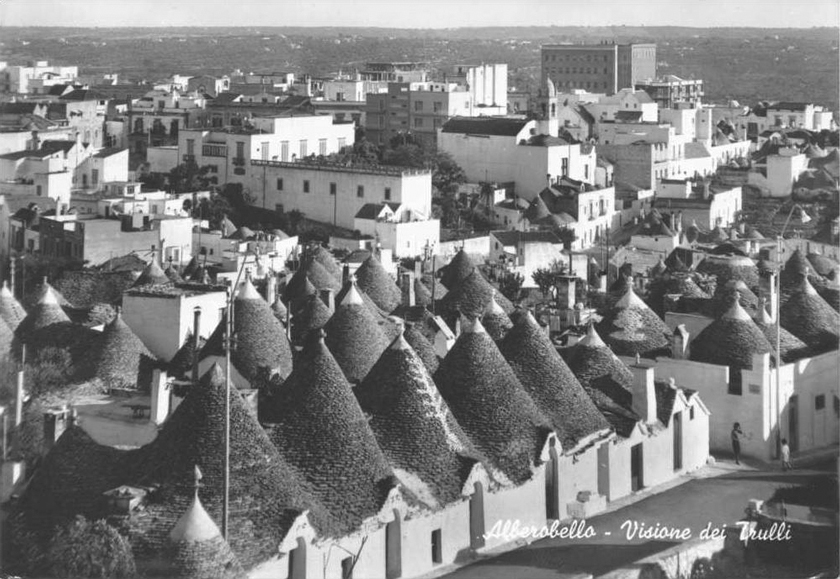
Carte postale noir et blanc des années 1950-1960.
Black and white postcard of the 1950s-1960s. |
|
La rue
Monte Pertica est photographiée ici depuis les parties hautes de l'église de
Saint Antoine. Cette vue plongeante fait apparaître, à l'arrière-plan, la ville
moderne avec ses immeubles cubiques. Sur le devant du 3e
cône de la rangée à partir de la gauche, a été peint
à la chaux un symbole ressemblant à un rameau. La rue a été élargie et le mur de
pierre sèche visible dans les cartes précédentes a laissé la place à un mur en
maçonnerie liée. Sur la façade de l'habitation No 1 (au bout Ouest de la rangée),
on aperçoit un poteau fourchu oblique qui servait à porter le fil à sécher le
linge. Au-delà du bout Est de la rangée, débute la place d'Annunzio, avec un
groupe de trulli dont les façades ont été surélevées de façon à donner
l'illusion d'une habitation moderne. |
|
This view of Monte Pertica street was shot from the roofs of the
church of Saint Anthony. The high angle brings into view the
square buildings of the town's more modern parts. Across the front of the third
cone (from the left of the row of houses), a whitewashed symbol reminiscent of a
bough has been painted. The roadway has been widened, resulting in the dry stone
wall visible in the preceding postcards being replaced by mortared stonework.
Sticking out obliquely from the façade of trullo N. 1 (at the west end of the
row), is a forked perch used for supporting a clothes line. Beyond the east end
of the row, at the inception of Piazza d'Annunzio, stands a trullo house
whose walls have been raised to make it look like a modern house. |
|
|
|
DOCUMENT 5 |
|
 |
|
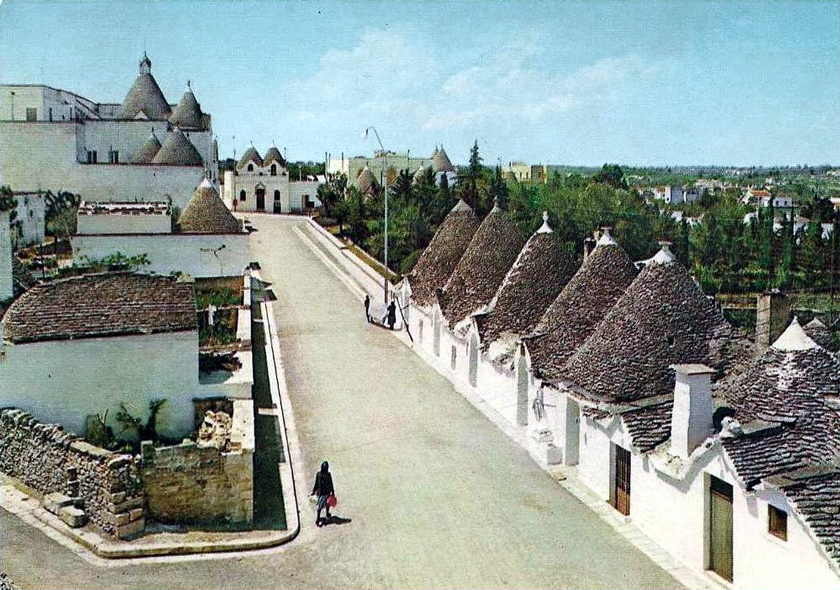
Carte postale
couleur des années 1960. Éditeur : Cav. G. Lobuono - Bari.
Colour postcard of the 1960s. Publisher: Cav. G. Lobuono
- Bari. |
|
Avec cette carte en couleur, on passe aux
années 1960. La vue est prise depuis l'est et en plongée. La chaussée élargie
a été dotée d'un trottoir sur sa rive gauche. Les murs des jardinets ont été reculés
d'autant et refaits à la moderne. On reconnaît les cinq grands cônes, suivis du
petit. Le symbole ressemblant à un rameau peint sur le devant du 3e cône
est bien visible ainsi qu'une croix sur le devant du petit cône.
Une curiosité : le mur en pierre sèche
bordant la ruelle en oblique présente un échalier là où le chaperon de dalles
posées de chant laisse la place à des dalles posées à plat; deux gros blocs
forment une sorte de marchepied sous une volée de trois marches saillantes
fichées dans le mur. |
|
With this colour postcard, we move on to the 1960s. The picture is taken from
the East and from a high angle. The street surface has been widened and fitted
with a pavement on its left-hand side. The wall alongside the garden plots has
been moved back and rebuilt to modern standards. The five high cones and the
small one are easily recognizable. The bough-like symbol
whitewashed across the front of the third cone is still visible as well as
a cross splashed across the front of the smaller cone.
Curiously, the dry laid wall bordering the oblique street
in the left corner of the picture is equipped with a stone stile: the coping of
slabs set on edge gives way to an interval of slabs laid flat above a flight
of three steps projecting from the wall face and reached via two big stone
blocks acting as stepping stones. |
|
|
|
DOCUMENT 6 |
|
 |
|
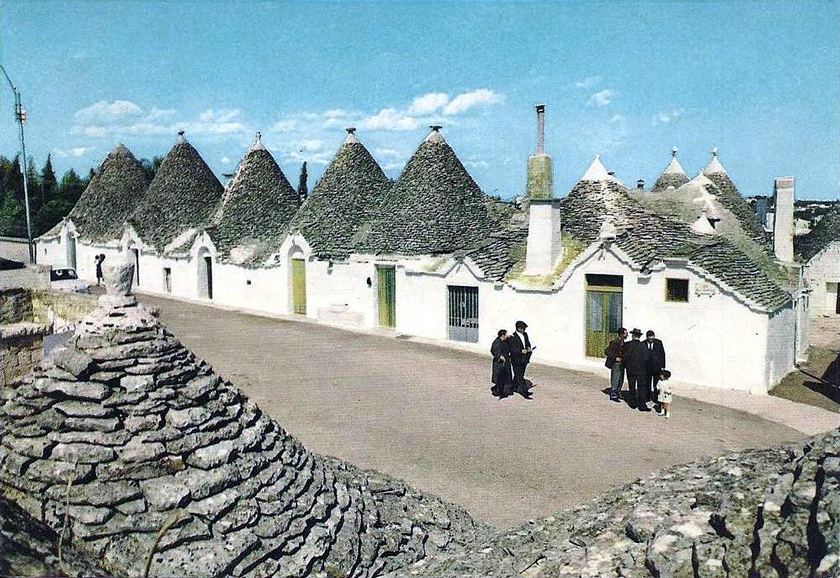
Carte postale
couleur ayant voyagé en 1966.
Colour postcard posted 1966. |
|
Toujours dans les années 1960,
le même alignement vu depuis les toitures d'une maison du côté opposé.
On distingue bien la morphologie des différentes entrées : les quatre
les plus à gauche se terminent par un arc en plein cintre sous un fronton,
la 5e est d'élévation rectangulaire et sans fronton, la 6e
et la 7e consistent en une baie rectangulaire sous fronton. La maison
à l'extrême droite est un édifice composite, regroupant plusieurs cellules.
Elle est la seule à avoir sa souche de cheminée côté rue. Les personnes
présentes dans la rue sont des riverains qui, manifestement, ne savent pas
qu'ils sont dans l'objectif du photographe. L'avant d'une petite Fiat se
dessine au niveau du lampadaire, signe que l'automobile se démocratise.
Le cône visible au premier plan à
gauche nous montre comment sont disposées les lauses dans les cônes anciens :
selon une légère déclivité de l'intérieur vers l'extérieur, et avec un pureau
qui se réduit là où la pente est la plus forte. |
|
Another 1960s
colour postcard of the same row of houses, seen
from the roof of a trullo house on the opposite side of the street. The
various doorways fall into three morphological types: the first four on the left
are spanned by a semi-circular arch underneath a triangular pediment, the fifth
is spanned by a mere lintel, the 6th and 7th are spanned by a lintel underneath
a triangular pediment. The house at the extreme right is a multi-cell composite
structure and the only one with a chimney stack at the front. The people outside
are locals, unaware that they are being photographed. What appears to be the
front of a small Fiat can be seen close to the lamp post on the right, an
indication that the personal car is becoming popular.
The left-hand cone
in the foreground reveals the method with which roof stone tiles were laid in older
trullo roofs, i.e. with a slight outward slant and an exposed part that
diminishes as the slope increases. |
|
|
|
DOCUMENT 7 |
|
 |
|
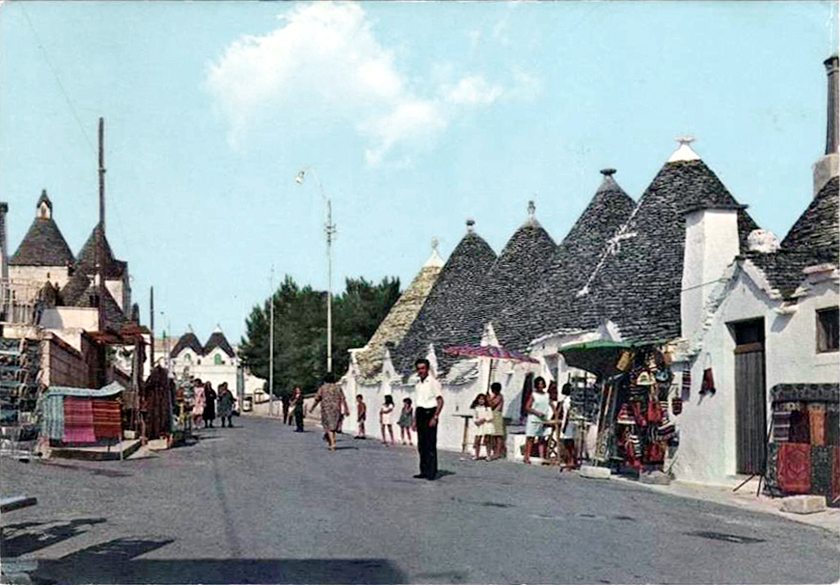
Carte postale couleur des années 1970.
Colour postcard of the 1970s. |
|
Une décennie plus tard, dans
les années 1970, le décor n'est plus le même : le tourisme s'est
désormais installé dans deux des habitations, d'après les étals
visibles. La toiture de l'habitation à
l'extrême gauche de l'alignement a été refaite par des artisans qui
ont donné au cône un caractère géométrique qu'il n'avait pas, ainsi
que le faîtage sculpté qui lui manquait. Le symbole qui était peint
sur le cône No 3 a disparu, mais un autre – une croix apparemment – est
apparu sur le cône No 5. |
|
A decade later, in the 1970s, the scene has
changed: judging from the stall outside two of the houses, Tourism has made
its debut. The roof of the house at the extreme left end of the row has been
rebuilt by local craftsmen, gaining in the process both a rectilinear profile
and a brand new carved pinnacle. The symbol painted on cone N. 3 has faded away
while another – a cross apparently – has popped up on cone N. 5. |
|
|
|
DOCUMENT 8 |
|
 |
|
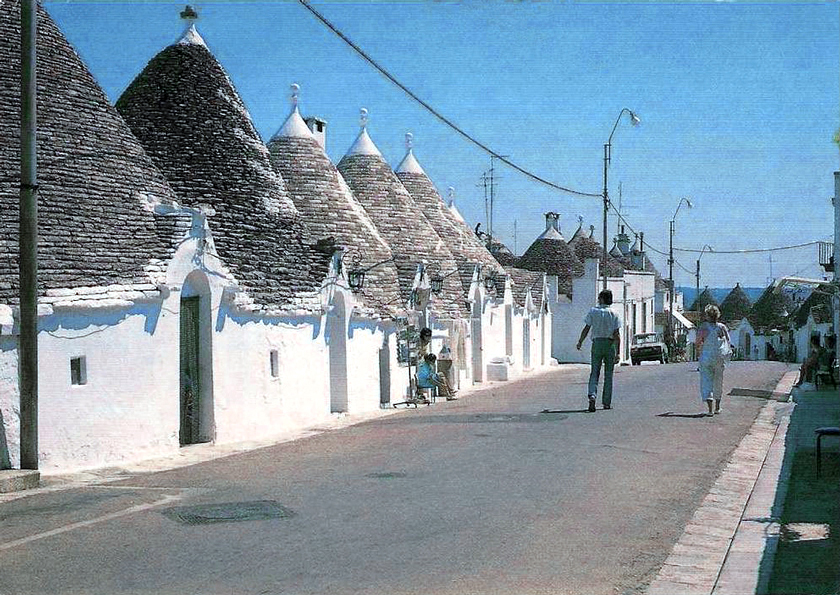
Carte
postale couleur des années 1980-1990.
Colour postcard of the 1980s-90s. |
|
Sur cette carte postale des années
1980-1990, on constate que les cônes
Nos 3, 4 et 5 ont été refaits tandis que le cône No 1 a pris une patine
grisâtre. Les trois cônes passés entre les mains d'artisans sont d'une
rectilinéarité parfaite. Ils ont été affublés du même pinacle gracile et
de symboles qui n'y figuraient pas auparavant. Pour faire bonne mesure,
un 4e symbole a été ajouté sur le cône No 2. L'entrée sous le
cône No 5 s'est vu gratifiée d'un fronton qu'elle n'avait pas.
Le conduit de cheminée entre l'entrée No 6 et l'entrée No 7 s'est
volatilisé. Enfin, des lanternes ont été fixées en applique en haut des
frontons Nos 2, 3 et 4.
Un couple de touristes passe, sous
les yeux de marchands de souvenirs. À partir de la voiture, commence
la place d'Annunzio. |
|
This postcard of
the 1980s-90s shows that trullo cones N. 3, 4 and 5 have been completely
rebuilt while trullo cone N. 1 has weathered to a
grey shade. The intervention of local roof repairers has resulted in all three
refurbished roofs gaining a perfectly linear profile. In the process, they have
been graced with the same slender pinnacle and adorned with painted symbols that
did not exist before. To add insult to injury, a fourth symbol has been painted
on cone N. 2. The doorway underneath cone N. 5 has been favoured with the
pediment it was lacking. The chimney stack between entrance N. 6 and
entrance N. 7 has vanished. As a final touch, lanterns have been mounted over
doorways N. 2, 3 and 4.
Two tourists, a man
and woman, happen to be strolling past a gift shop. A car is parked where via
Monte Pertica merges into Piazza d'Annunzio. |
|
|
|
DOCUMENT 9 |
|
 |
|
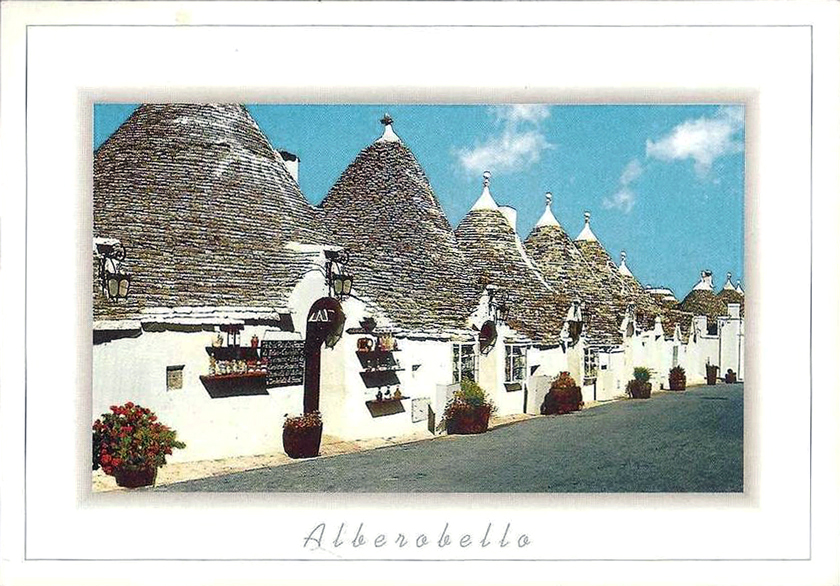
Carte postale couleur des années 1990. Editeur : DELADUS.
Colour postcard of the 1990s. Publisher: DELADUS. |
|
À en juger d'après cette carte des
années 1990, la métamorphose de la file de trulli à des fins touristiques
est bien avancée. Si les toitures n'ont pas bougé par rapport au
document précédent (la No 2, en courbe et contrecourbe, est toujours
d'origine), en revanche la vente de souvenirs a gagné les deux
premières habitations : des vitrines et des étagères sont accrochées
aux façades, des lanternes ornent désormais la façade de la première
habitation. Pour rendre plus attrayant un ensemble par trop minéral,
on a installé des bacs à fleurs devant les façades. Le cône No 1 a
été gratifié du symbole qui lui faisait défaut jusque là. |
|
Judging from
this 1990s colour postcard, the conversion
of the row of trullo houses to Tourism is well on its way. Although
the roofs show no visible change as compared with the previous document
– cone N. 2 still retains its original curvilinear profile –, souvenir
shops have opened also in the first two houses: showcases and shelves
have been fixed to the front walls, another two lanterns embellish the
front of the first house. To alleviate the overly mineral appearance of
the row of trulli, plant tubs have been
installed outside. At the same time, cone N. 1 has been graced with the
whitewashed symbol it had been lacking so far. |
|
|
|
DOCUMENT 10 |
|
 |
|
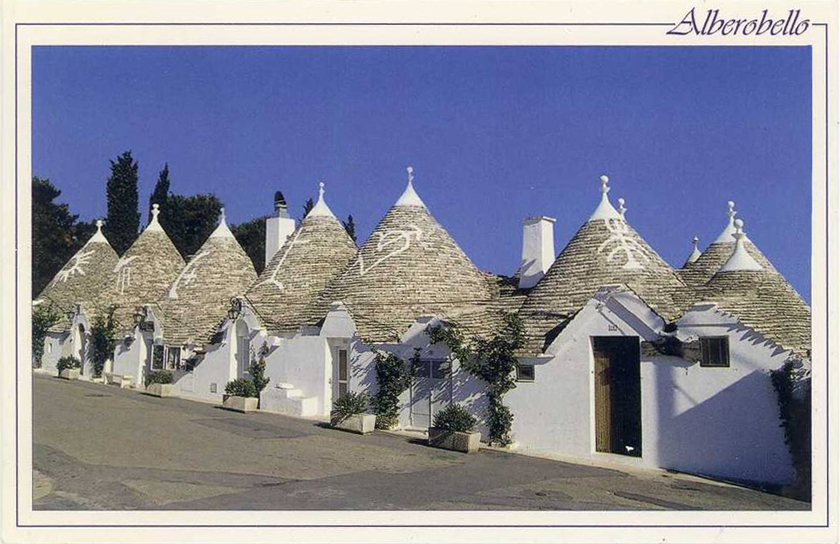
Carte postale couleur des
années 2000.
Colour postcard of the 2000s. |
|
Avec cette dernière carte postale, nous
arrivons aux années 2000. L'adaptation de l'alignement de maisons à l'activité
touristique est achevé : tous les cônes ont été normalisés. Lors de
sa réfection, le cône No 2 s'est vu doté d'un nouveau symbole. On a
fait pousser des plantes grimpantes contre les parois. L'angle de
prise de vue permet d'identifier les divers symboles plaqués sur le
devant des cônes (voir ci-après). |
|
This final postcard
ushers in the 2000s. The touristic conversion of the row of trulli is now
complete: all six cones have been rebuilt to the same standards. In the process,
cone N. 2 has also been adorned with a brand new symbol. Climbing plants now
cling to the front walls. The angle of view allows the various painted symbols to
be identified. (see next document). |
| |
|
DOCUMENT 11 |
|
 |
|
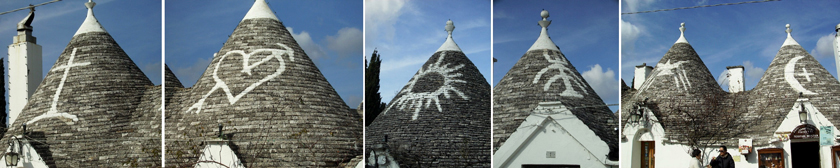
Montage photographique (source :
Wikipédia).
Photographic montage from Wikipédia. |
|
Emprunté à l'encyclopédie en ligne
Wikipédia, ce montage nous fait découvrir, quoique dans un ordre différent de
celui de la réalité, les symboles de la rue Monte Pertica. De gauche
à droite, on a une croix sur un socle, un cœur transpercé, un ostensoir, une
croix à l'arbre (?), une colombe figurant le Saint Esprit, un croissant de
lune enserrant une croix. Ces symboles sont contemporains des réfections de
la fin du XXe siècle et du tout début du XXIe et n'ont
rien d'authentique, ayant été apposés par les couvreurs là où il n'y en
avait jamais eu. |
|
A photographic montage, borrowed from Wikipedia, displays – albeit in a different
order from the actual one – the various symbols now extant in Monte Pertica
street. Starting from the left, we can see a cross on a pedestal, a heart
pierced by an arrow, a monstrance, a combined cross and tree (?), a dove
representing the Holy Spirit, a moon crescent next to a cross. As these
symbols have been added after the roofs were rebuilt by local craftsmen in the
late 20th century and early 21st century, we are left in
no doubt as to their lack of authenticity. |
|
|
|
DOCUMENT 12 |
|
|
|
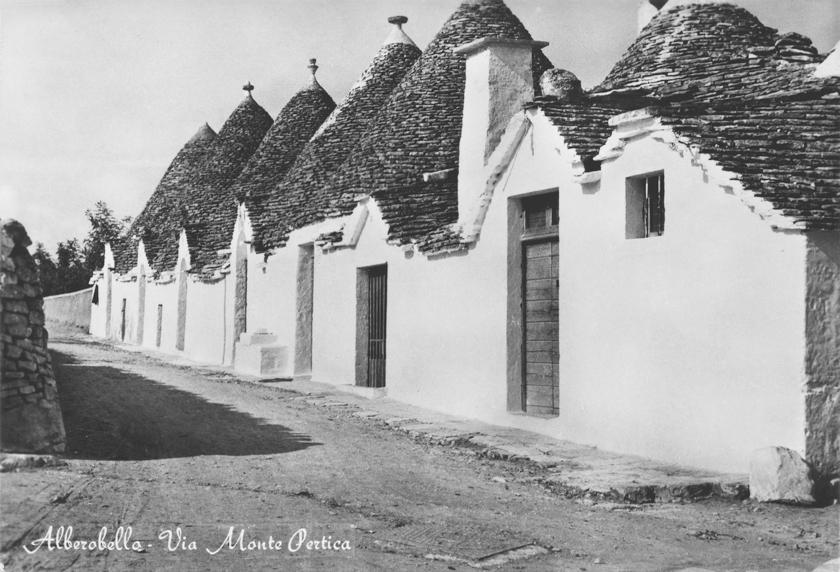
Un dernier adieu à l'authentique rue Monte Pertica.
A last farewell to the original Monte Pertica
Street. |
La présente page est susceptible d'être modifiée /
This page remains subject to additional edits
Le 20 janvier 2011 / January 20th, 2011 - Complété le 1er février 2011
- 19 juin 2011 - 23 août 2011 - 8 octobre 2011 / Augmented on February 1st, 2011
- June 19th, 2011 - August 23rd, 2011 - October 8th, 2011
Référence à citer
/ To be referenced as :
Christian Lassure
Série Les trulli
ou casedde d'Alberobello (province de Bari, Italie) à travers les cartes
postales et photos anciennes (Series: The trulli or casedde
of Alberobello, province of Bari, Italy, through old postcards and photos)
III - Les avatars de la rue Monte Pertica au quartier Monti (1950-2010) (The
changing face of via Monte Pertica in the Monti district (1950-2010)),
http://www.pierreseche.com/alberobello_monte_pertica.htm
20 janvier 2011
I -
Les trulli. Résumé historique et architectural
Trulli. A historical and architectural summary
II-
Photos de la première moitié du XXe siècle
Photos of the first half of the 20th century
III -
Les avatars de la rue Monte Pertica au quartier Monti (1950-2010)
The changing face of via Monte Pertica in the Monti district (1950-2010)
IV - L'hôtel des
trulli
The Hotel of the Trulli
V -
Rione Monti, via Monte Santo
VI -
Rione Monti, via Monte Sabotino
VII -
Rione Monti, via Monte San Michele
VIII - Rione Monti,
via Monte Nero (en construction)
IX -
Rione Monti, via Monte Pasubio (en construction)
X -
Rione Monti, via Monte San Gabriele
XI -
Rione Monti, via Duca d'Aosta
XII -
Rione Monti, piazza d'Annunzio
(en construction)
XIII -
Rione Monti, vico d'Annunzio
(en construction)
XIV -
Rione Monti, Chiesa de Sant' Antonio
XV -
Rione Monti, panorama della zona monumentale "Principe de
Piemonte" (en construction)
XVI -
Rione Aia Piccola, piazza Plebiscito
XVII -
Rione Aia Piccola, via Giuseppe Verdi
(en construction)
XVIII -
Rione Aia Piccola, via Duca degli Abruzzi
XIX -
Rione Aia Piccola, via Galilei
XX -
Il Trullo Sovrano (en construction)
XXI -
Via Monte Calvario
XXII -
Via Monte Grappa (en construction)
page d'accueil
home page |